














Discover a New Kind of Graphic Novel
Join "The Zurvan Club" and enjoy the thrill of the Adventure
Myths and legends try to explain real events that happened a long time ago. Stories have been passed from generation to generation, as tales to be told in front of the fire on long winter nights, but... What if they were not fantasy at all?
Scattered around the world, we find amazing remains of lost civilizations that defy our understanding of the ancient world, and invite us to think about the people that built them. How and why did they do it? What happened to them?
Although the adventures of "The Zurvan Club" are fictitious stories, they are based on real ancient myths and legends that trigger our imagination. As our own civilization has become more and more advanced, old miracles and tales are viewed from a completely different point of view.
Now, we are living in a time in where "magic mirrors", "flying carpets" or "divine fire falling from the sky" could be understood as "computers", "helicopters" and "atomic bombs". We don't need to say that people travel inside a whale because we all know what a submarine is. If we take the ancient records and re-read them from a modern point of view, a new amazing and shocking aspect of our past emerges...
Scattered around the world, we find amazing remains of lost civilizations that defy our understanding of the ancient world, and invite us to think about the people that built them. How and why did they do it? What happened to them?
Although the adventures of "The Zurvan Club" are fictitious stories, they are based on real ancient myths and legends that trigger our imagination. As our own civilization has become more and more advanced, old miracles and tales are viewed from a completely different point of view.
Now, we are living in a time in where "magic mirrors", "flying carpets" or "divine fire falling from the sky" could be understood as "computers", "helicopters" and "atomic bombs". We don't need to say that people travel inside a whale because we all know what a submarine is. If we take the ancient records and re-read them from a modern point of view, a new amazing and shocking aspect of our past emerges...
Think about it...
and enjoy
the adventure of life!
and enjoy
the adventure of life!
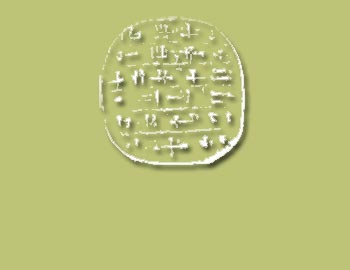
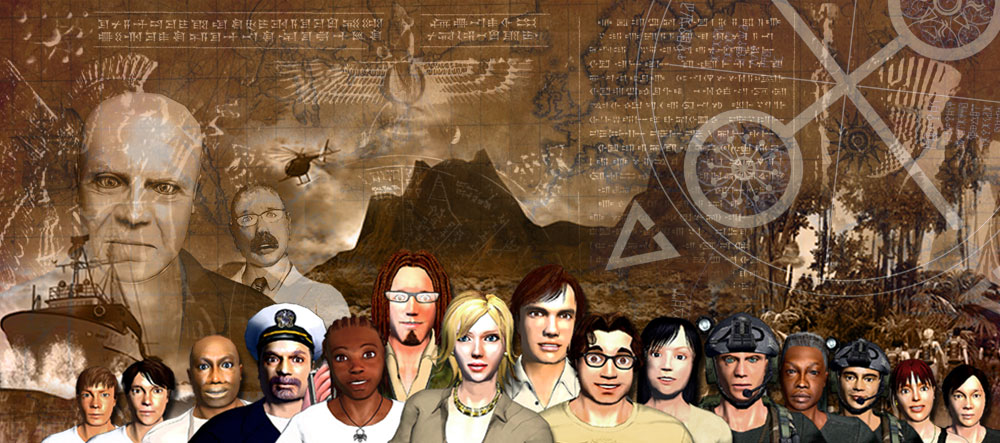
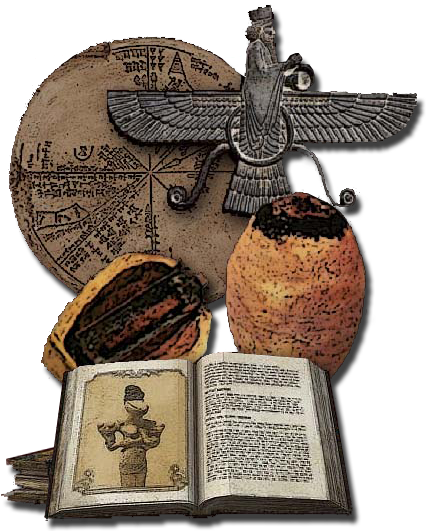
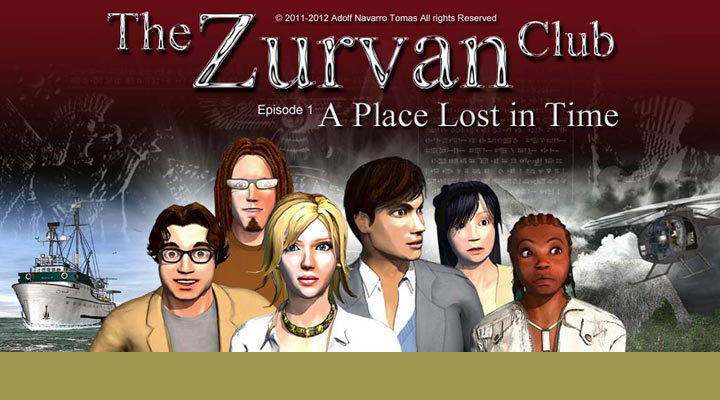
In this first episode, an ancient Sumerian carving will lead us to an incredible discovery about the origins of humankind. Meet Alex, Julia and friends in their quest to unravel the ancestral forces that almost destroyed the world a long time ago, and are still menacing our future. Join the team in this astounding adventure, looking for an impossible place that seems to hold the secrets of a hideous, out of control, ancient secret.
Episode 1 "A Place Lost in Time"

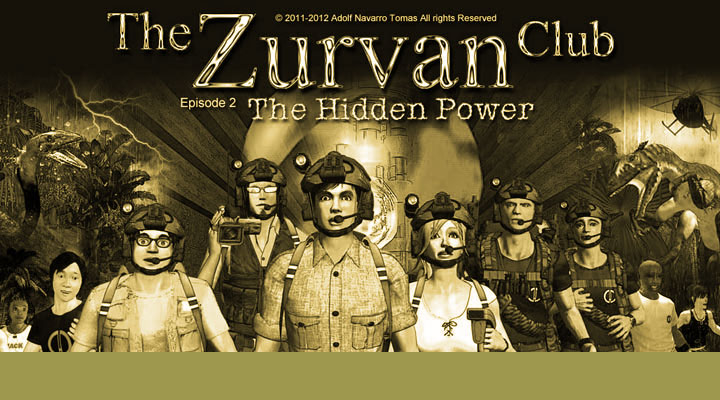
Episode 2 "The Hidden Power"
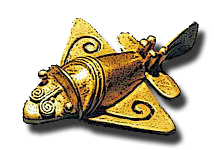
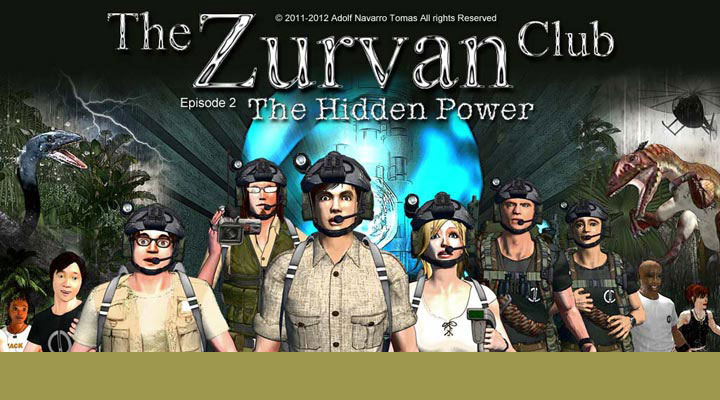
Action ramps up in this second episode where Alex, Julia and their friends explore the ancient remains of an alien civilization, looking for a clue that could explain the strange phenomenon that affects the legendary island of Saint Brendan. Bizarre and threatening creatures inhabit the place, and danger hides in every corner as they continue their quest to uncover the extraordinary secret that is hidden deep in the island. But this is only the tip of the iceberg that will lead them to a series of fascinating discoveries.

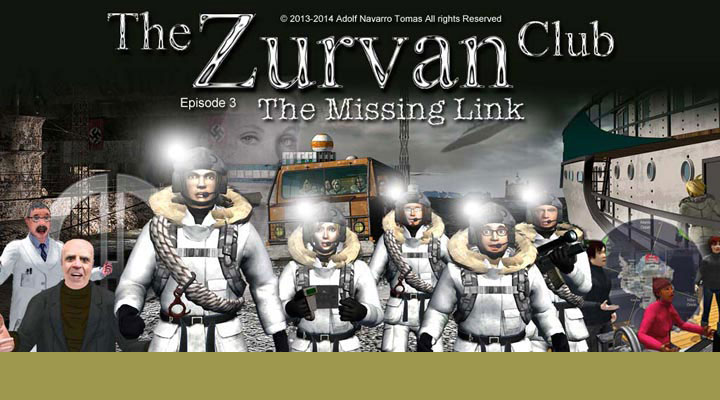
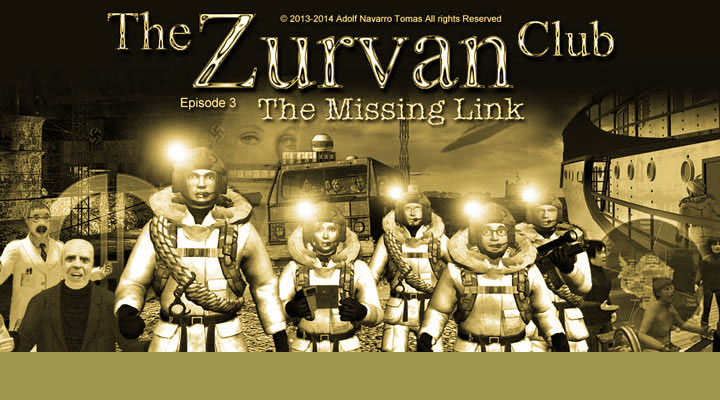
Episode 3 "The Missing Link"
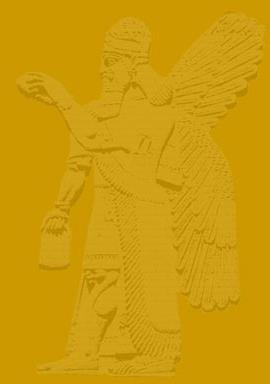
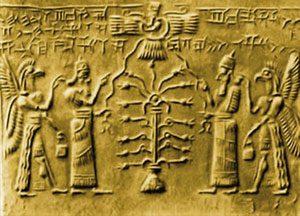
The Wopod Corporation desperately needs the data collected by the Aurora II in its voyage to Saint Brendan island and they will take all necessary measures to obtain it, no matter the cost. Meanwhile, the unexpected link between the Sumerian carvings, the Nephilim plates and the Thule and Vril esoteric societies will lead our friends to a quest of a hidden place in the Antarctic where the Nazis developed an incredible technology using the lost knowledge of the Nephilim.
Episode 4 "The Hidden Threat"
Who is Zurvan?
In the old Sumerian civilization, Zurvan was the God of infinite time and space, deity of matter. Zurvan is the parent of the two opposites representing the good God Ahura Mazda and the evil Angra Mainyu. Zurvan is regarded as a neutral God; being without gender or passion, one whom there is no distinction between good or evil. Zurvan is also the God of destiny, light and darkness. Zurvan is a normalized rendition of the word, which in Middle Persian appears as either Zurvan, Zruvan or Zarvan. The Middle Persian name derives from Avestan Zruvan - "time" or "old age".
(Source Wikipedia)
(Source Wikipedia)
Watch Alex talking
about the Sumerians
about the Sumerians
Watch Julia talking
about Physics
about Physics
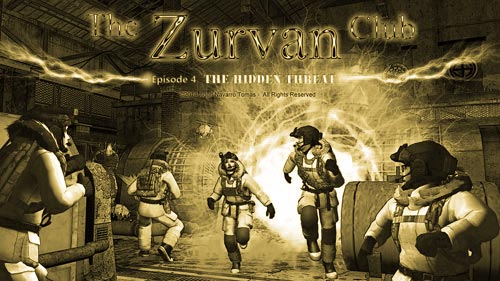
The inter-dimensional portal opened by the Nazis in their hidden Antarctic base allowed the entry of some vicious creatures in our own universe. This hidden threat has been sleeping for several years waiting for the specific conditions to return. Our friends will face the challenge to stop them while confronting the Wopod Corporation's men in their quest to take over the secrets of this dangerous Nephilim technology.
We are currently working on this episode...
We'll put the new slides for on line viewing as soon as they were ready...
We'll put the new slides for on line viewing as soon as they were ready...
Stay tuned!


Click on the image to read the Book
Click on the image to read the Book
Click on the image to read the Book














go left end


Do you want to know more?
Visit our archives....
Use the keyboard arrow keys or the mouse wheel to scroll the page horizontally

Use the keyboard arrow keys or the mouse wheel to scroll the page horizontally
Select your language ·········
